Reviewed by Ziheng Editorial against the public method · Updated 16 August 2026 · Editorial policy
Direct answer
BaZi luck pillars, called Da Yun, add sequential ten-year stem-and-branch contexts to the natal chart. The starting age is calculated from birth time, direction, and distance to the relevant solar term; it is not a universal age shared by everyone.
Read it in this order
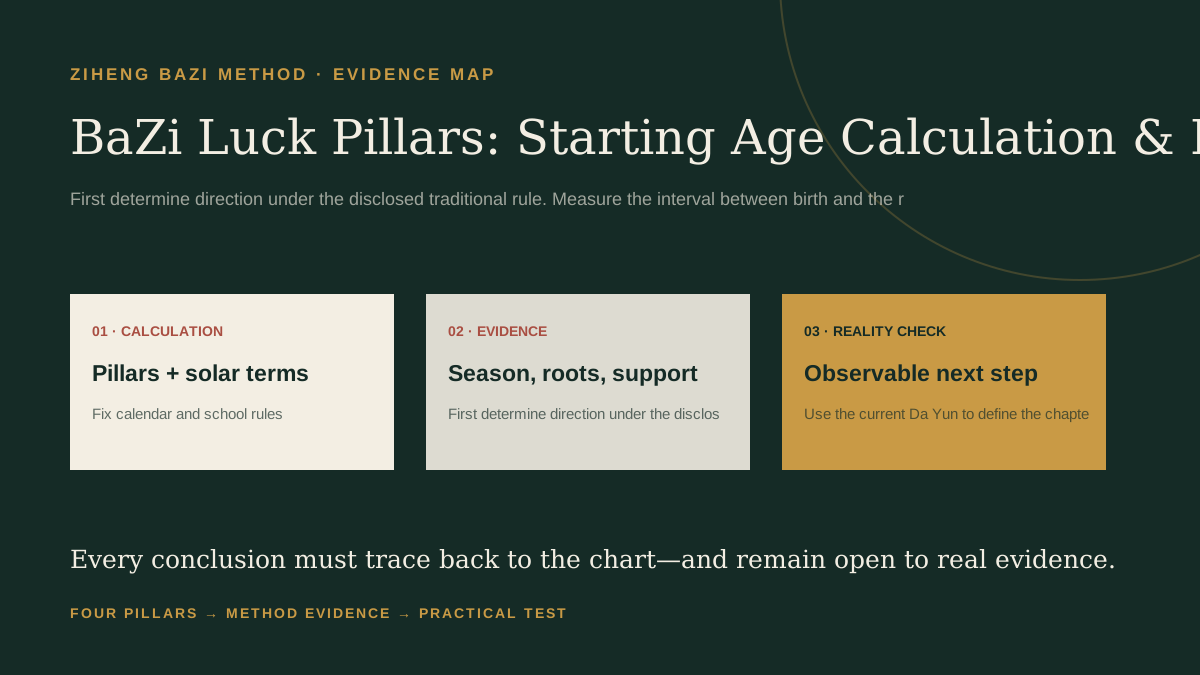
First determine direction under the disclosed traditional rule. Measure the interval between birth and the relevant adjacent solar term, convert that interval to a starting age with the stated convention, and keep the exact civil or true-solar time visible. Show the calculated start date instead of hiding it behind a rounded age, then compare the current and next Da Yun before adding an annual pillar.
From symbol to real life
Use the current Da Yun to define the chapter, the annual pillar to define the planning question, and shorter timing only for experiments or reviews. If a birth sits near a solar-term or time boundary, compare both transparent scenarios. Do not choose an irreversible date from timing alone.
FROM ARTICLE TO YOUR FOUR PILLARS
Do not stop at the concept. Check your own evidence.
Calculate the Four Pillars and current Da Yun free, then test the evidence required by “BaZi Luck Pillars: Starting Age Calculation & Da Yun”: First determine direction under the disclosed traditional rule. Measure the interval between birth and the relevant adjacent solar term, convert that interval to a starting age with the stated convention, and keep the exact civil or true-solar time visible. Show the calculated start date instead of hiding it behind a rounded age, then compare the current and next Da Yun before adding an annual pillar.
See my complete BaZi chart →What this cannot do
This method cannot guarantee wealth, health, legal, work, or relationship outcomes. It is for cultural reflection and planning questions; major decisions still require real evidence and qualified advice.
FAQ
How is the BaZi luck pillar starting age calculated?
First determine forward or reverse direction under the disclosed rule. Measure birth time to the relevant adjacent solar term, then convert that interval to a starting age with the stated convention. A reliable result shows the exact calculated start date and the civil or true-solar time used.
What evidence should remain visible when reading BaZi Luck Pillars: Starting Age Calculation & Da Yun?
First determine direction under the disclosed traditional rule. Measure the interval between birth and the relevant adjacent solar term, convert that interval to a starting age with the stated convention, and keep the exact civil or true-solar time visible. Show the calculated start date instead of hiding it behind a rounded age, then compare the current and next Da Yun before adding an annual pillar.