Reviewed by Ziheng Editorial against the public method · Updated 16 August 2026 · Editorial policy
Direct answer
The Ten Gods are ten relationships between the Day Master and other stems: peers, resource, output, wealth, and authority, each divided by polarity. They describe functions and tensions, not moral categories.
Read it in this order
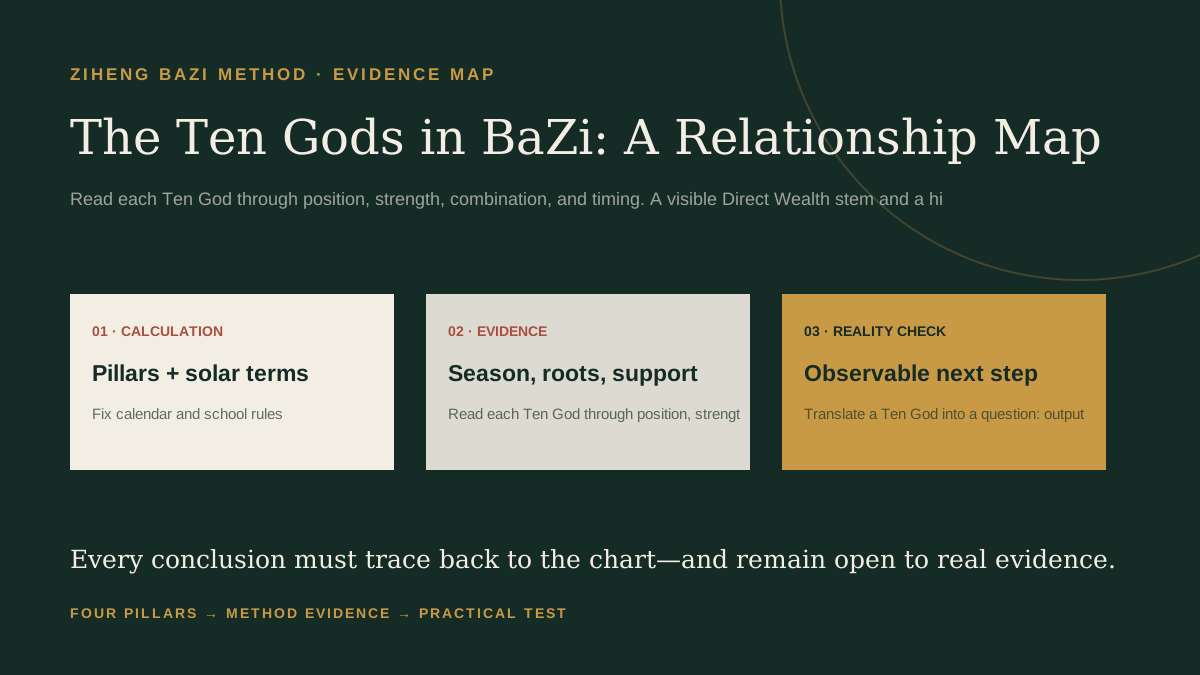
Read each Ten God through position, strength, combination, and timing. A visible Direct Wealth stem and a hidden one do not carry the same emphasis, and a useful relationship can become excessive when over-supported.
From symbol to real life
Translate a Ten God into a question: output becomes how ideas leave your head, authority becomes standards and accountability, wealth becomes managed exchange, and resource becomes learning or recovery.
FROM ARTICLE TO YOUR FOUR PILLARS
Do not stop at the concept. Check your own evidence.
Calculate the Four Pillars and current Da Yun free, then test the evidence required by “The Ten Gods in BaZi: A Relationship Map”: Read each Ten God through position, strength, combination, and timing. A visible Direct Wealth stem and a hidden one do not carry the same emphasis, and a useful relationship can become excessive when over-supported.
See my complete BaZi chart →What this cannot do
This method cannot guarantee wealth, health, legal, work, or relationship outcomes. It is for cultural reflection and planning questions; major decisions still require real evidence and qualified advice.
FAQ
Are some Ten Gods always lucky?
No Ten God is permanently lucky or unlucky. Its function depends on position, strength, combination, timing, and whether it supports or overloads the chart’s current structure.
What evidence should remain visible when reading The Ten Gods in BaZi: A Relationship Map?
Read each Ten God through position, strength, combination, and timing. A visible Direct Wealth stem and a hidden one do not carry the same emphasis, and a useful relationship can become excessive when over-supported.