LIFE PALACE · 6 MIN READ
The Life Palace is a
starting point, not a box.
It is often the first palace people read, but it becomes useful only when it is connected to work, resources, relationships, and timing.
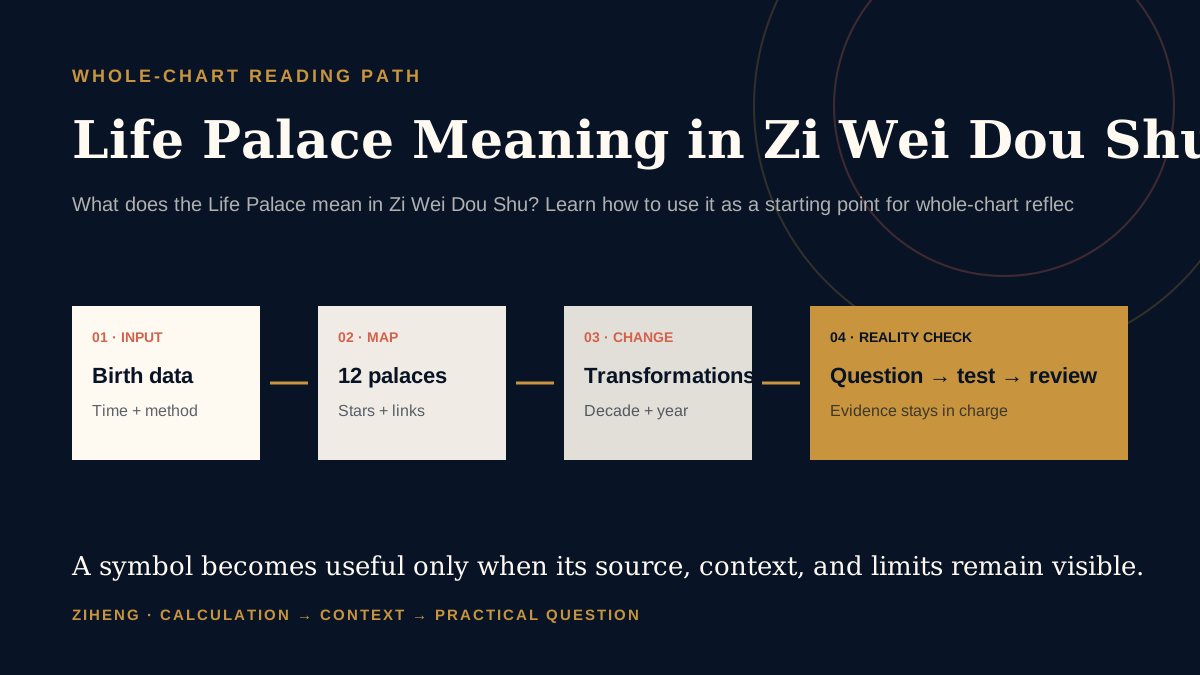
The Life Palace, often called Ming Palace, is a traditional reference point for how a person approaches choices, identity, and change. It can give a chart a centre of gravity. It is not a personality diagnosis and it does not override experience, culture, or agency.
Read style before fate
Use this palace to notice recurring decision styles: do you seek structure, respond to novelty, value visible contribution, or need time to process? These are prompts for reflection, not permanent traits assigned by a chart.
Connect three companion palaces
Career adds the work environment and public role. Wealth adds resources and exchange. Travel adds the outside world, unfamiliar settings, clients, and movement. Together, they tell a more useful story than a Life Palace label alone.
Turn it into a question
Ask: what part of my current decision feels most like me, and what part is a habit I can revise? Then use evidence, conversations, and a small experiment to answer. A chart should widen your options, not narrow them.
Next, read the Career Palace or the 10-year timing layer.
FROM GUIDE TO YOUR CHART
Recognize the idea?
Test it against your own timing.
Use the free chart to locate the evidence behind “Life Palace Meaning in Zi Wei Dou Shu.” Check the connected palaces and active timing; continue only if the personal pattern fits your lived context.
FIND YOUR STARTING POINT
Open the Life Palace
on your own map.
Frequently asked questions
Is the Life Palace the most important palace?
It is a common starting point, but every question needs related palaces and whole-chart context.
Does the Life Palace define my personality?
No. It is a symbolic lens for reflection, not a clinical or fixed personality assessment.