STAR BASICS · 7 MIN READ
The 14 major stars are
a vocabulary, not a scorecard.
A major star becomes meaningful only when you see its palace, companions, and the question you are actually trying to answer.
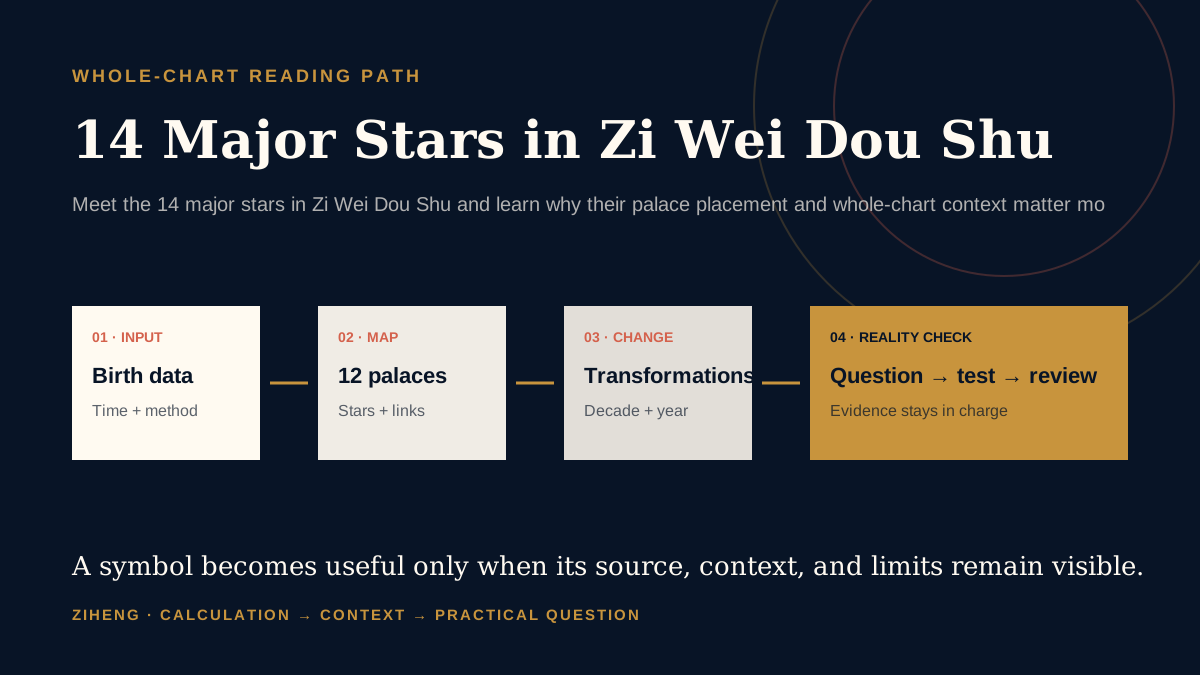
In Zi Wei Dou Shu, the fourteen major stars form the primary symbolic layer of the chart. English translations vary by school: one tool may call a star Emperor, another may use Zi Wei or Purple Emperor. Translation is useful when it helps a newcomer read the map, not when it pretends every school says the same thing.
Start with placement
Ask where the star sits. A star in the Life Palace is discussed differently from the same star in Career, Wealth, Partnership, or Travel. The palace tells you the life domain; the star offers a symbolic style for considering it.
Then add the surrounding pattern
Major stars have companions, oppositions, transformations, and timing layers. That is why “I have this star, what does it mean?” is a useful first question but not a final reading. A whole chart keeps both strengths and trade-offs visible.
Use a star as an experiment prompt
Instead of treating a star as an identity test, translate it into a practical question. What kind of work structure helps you contribute? Where do you need a clearer boundary? What evidence would help you decide? The answer still belongs to your real circumstances.
See how stars live in the 12 palaces, then start with the Life Palace.
FROM GUIDE TO YOUR CHART
Recognize the idea?
Test it against your own timing.
Use the free chart to locate the evidence behind “14 Major Stars in Zi Wei Dou Shu.” Check the connected palaces and active timing; continue only if the personal pattern fits your lived context.
FIND YOUR STAR PLACEMENTS
See the stars
on your own chart.
Frequently asked questions
Are the 14 major stars astronomical objects?
They are traditional symbolic names used in the charting system, not a claim about visible astronomy deciding events.
Is one major star enough to read a chart?
No. Read its palace and related palaces before drawing a useful conclusion.